Jul 17, 2026Buying Guides
How to Handle a Custom Polo Glove Inquiry Without Overwhelming the Buyer
A custom polo glove inquiry shows how asking six valid questions too early can stop a promising B2B conversation—and how manufacturers can improve.
A Custom Polo Glove Inquiry: Why Six Reasonable Questions Went Unanswered
For a sourcing manager looking for a custom polo glove manufacturer, one experience may be almost as frustrating as failing to find a supplier:
You send one reference image, and the manufacturer replies with a long list of questions that requires input from purchasing, product development, design, and warehouse teams.
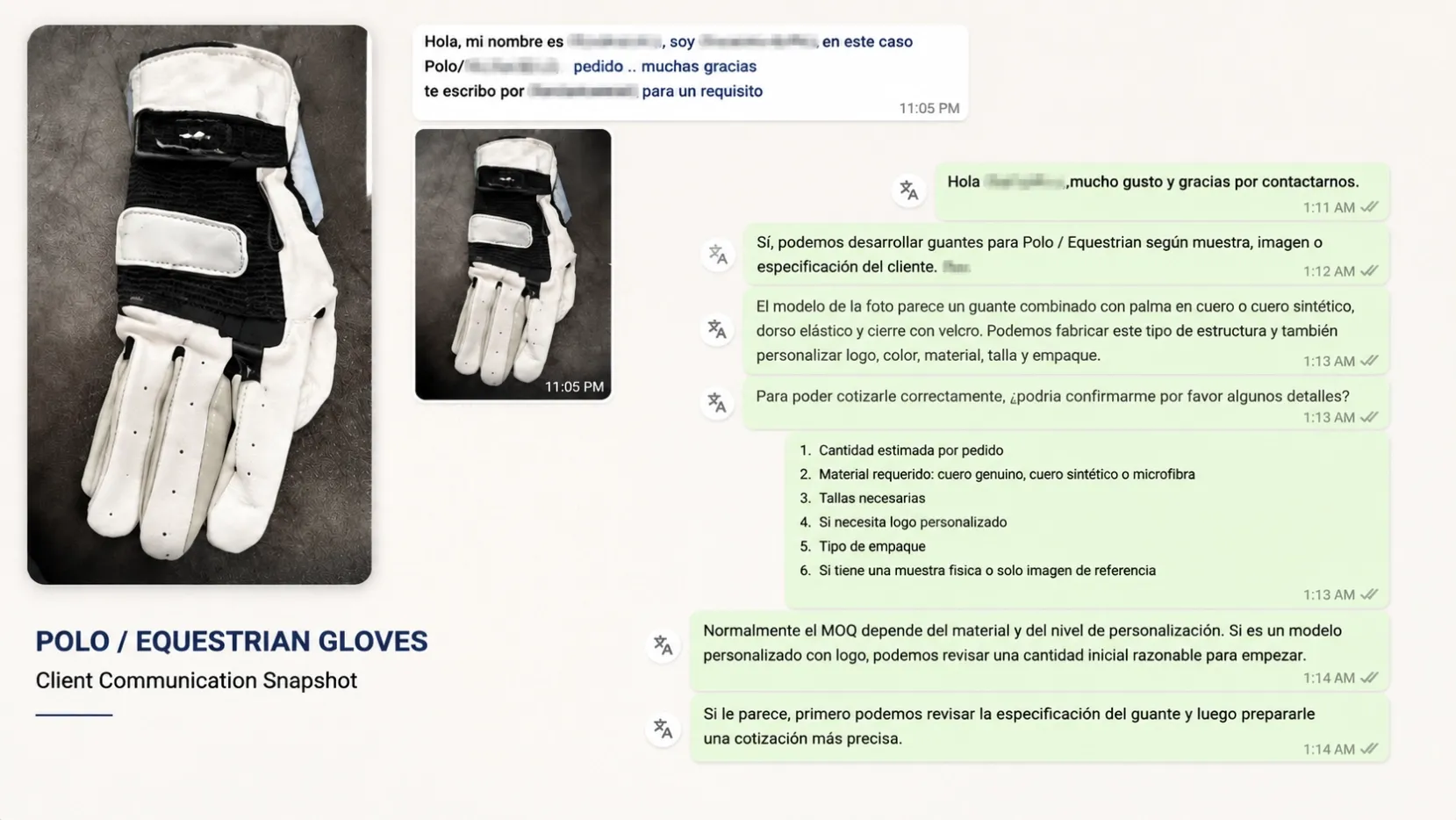
We recently received an inquiry from an overseas buyer who wanted to develop a polo glove based on a reference product. The request was clear, commercially relevant, and easy to understand.
We confirmed that we could evaluate the design. We then asked six reasonable questions about quantity, materials, sizing, logo customization, packaging, and sample availability.
Then the conversation stopped.
We do not know why the buyer did not continue. The project may have been delayed, the budget may have changed, another supplier may have responded faster, or the inquiry may simply have moved down the buyer’s priority list.
The more useful question is not why the buyer disappeared.
It is this:
When a buyer is still at the early inquiry stage, how can a glove manufacturer make the next step easier instead of creating more work?
A Promising Custom Polo Glove Inquiry
The buyer briefly introduced the project, explained that they were sourcing polo gloves, and asked whether we could develop a similar product from a reference image.
The message contained several positive buying signals:
- The inquiry came from a commercial buyer rather than an individual consumer.
- The buyer had already identified a specific product category.
- A reference product was available for initial evaluation.
- The buyer wanted to confirm development feasibility before moving further.
At this stage, the buyer’s first question was simple:
Can you manufacture a polo glove like this?
Our initial answer addressed that question:
Yes, we can evaluate and develop polo gloves based on a physical sample, detailed images, or customer specifications.
That part of the response was appropriate. The problem came immediately afterward.
The Six Questions We Asked
To prepare an accurate quotation, we requested the following information:
- Estimated order quantity
- Preferred palm material: genuine leather, synthetic leather, or microfiber
- Required size range
- Custom logo requirements
- Packaging requirements
- Availability of a physical sample
Every question was commercially valid.
A manufacturer eventually needs this information to calculate material consumption, assess tooling and sampling requirements, select production methods, and prepare pricing.
The issue was not that the questions were unnecessary.
The issue was that we asked them too early and all at once.
From the buyer’s perspective, the process changed suddenly. They had completed one easy action: sending a reference image and asking whether the product was feasible.
They then received a specification checklist that might require them to:
- Contact a product manager about materials
- Review previous purchase volumes
- Confirm the size assortment
- Check whether a physical sample was available
- Ask a designer about logo placement
- Discuss packaging with another department
A conversation that could have continued in seconds became an internal coordination task.
When buyers do not have all the answers immediately, the natural response is often:
I will come back to this later.
Sometimes, “later” never arrives.
The First Question Should Not Have Been About Quantity
When we reviewed the reference image again, we noticed a more basic information gap.
The image showed the back-of-hand side of the glove, but not the palm.
From the available image, we could reasonably identify:
- A stretch textile back
- Overlay panels along the fingers and side areas
- An adjustable hook-and-loop wrist closure
- Perforated sections for ventilation
- Decorative patches and branding elements
However, the image did not allow us to confirm:
- Whether the palm was genuine leather, microfiber, or PU synthetic leather
- Whether the palm included grip reinforcement
- Whether the thumb crotch had an additional wear patch
- Whether the glove included an inner lining
- The thickness and softness of the palm material
- The exact palm construction and seam layout
The most useful first question was therefore not about order quantity.
It was:
Could you send us one clear photo of the palm side?
That question would have given us the information needed for a more accurate preliminary evaluation while requiring very little effort from the buyer.
Five Ways We Could Have Handled the Inquiry Better
1. Do Not Identify Materials Too Early
A professional glove manufacturer should distinguish between what is visible and what still needs to be verified.
A back-of-hand image may reveal the general construction, wrist closure, textile panels, and decorative components. It usually does not provide enough evidence to confirm the palm material.
A more accurate response would be:
From the image, we can identify a stretch textile back and several overlay panels. We would need a palm-side photo or a physical sample to confirm the palm material and reinforcement structure.
This type of answer demonstrates technical discipline.
It also reduces the risk of developing a sample based on an incorrect assumption.
2. Ask One Low-Effort Question First
The easier it is for a buyer to respond, the more likely the conversation is to continue.
Instead of asking about quantity, materials, sizes, branding, packaging, and samples in the first message, we could have asked:
Could you send us one clear photo of the palm? We can then evaluate the construction and provide an initial material recommendation and price range.
The buyer would only need to provide one additional image.
They would not need to search old purchasing records, contact a warehouse, or wait for several colleagues to confirm specifications.
Once the buyer completes this small step, the manufacturer can introduce the next question naturally.
3. Do Not Ask “Trial Order or Full Container?” Too Soon
A commercial sourcing inquiry does not necessarily mean the project has reached the formal purchasing stage.
Asking whether the buyer wants a trial order or a full container may help estimate volume, but it can also feel premature during a first conversation.
A more practical question would be:
Would you like us to start with a standard construction and an indicative price range, or do you already have a target quantity and specification?
This gives the buyer two clear options.
It also helps the manufacturer understand the project stage without asking for an immediate volume commitment.
4. Show Product Understanding, Not Market Assumptions
Instead of assuming that a buyer prefers a particular material because of their location or market, the manufacturer should explain the actual performance requirements of a polo glove.
Key product considerations include:
- Palm grip stability: The glove should support controlled handling of both the polo mallet and reins, including in warm or humid conditions.
- Finger flexibility: The construction should allow natural finger movement during riding, rein control, and repeated swings.
- Thumb and crotch durability: These high-friction areas may require additional reinforcement based on the intended grip pattern.
- Breathability and moisture management: The back material should help reduce heat buildup during riding and repeated gripping.
- Secure wrist fit: The closure should minimize glove movement without creating excessive pressure.
- Consistent sizing: Reliable grading and production tolerances help brands maintain a predictable fit across bulk orders.
These points show that the supplier understands how the product will be used, not simply what it looks like.
5. Design a Clear Next Step
Every inquiry response should contain one action that the buyer can complete easily.
For example:
Please send us one clear photo of the palm. After reviewing it, we can provide initial material options, construction comments, and an indicative price range.
This is more actionable than:
Please provide the complete specification.
A good next step should be specific, useful, and proportionate to the buyer’s current level of commitment.
How We Would Reply Today
If we received the same inquiry again, we would not begin with six questions.
We would respond like this:
Hello, thank you for contacting us.We can evaluate and develop this type of polo glove based on a physical sample, detailed images, or a technical specification.From the current image, we can identify a stretch back and an adjustable wrist closure. However, we would need one clear photo of the palm to confirm the material, reinforcement areas, and overall construction.To keep the first step simple, would you prefer an initial standard proposal with an indicative price range, or do you already have an approximate order quantity?You may also send only the palm-side photo first, and we can start from there.
This response still demonstrates technical knowledge, but it reduces the buyer’s first action to one manageable step:
Send a palm-side photo.
What Information Is Needed for Custom Polo Glove Development?
Once the project moves beyond the initial feasibility stage, a manufacturer will need more complete information.
A basic custom polo glove development brief should cover the following areas.
- Product Construction
Provide clear images of:
- Palm
- Back of hand
- Finger sidewalls
- Thumb
- Wrist closure
- Inside construction, when available
A physical reference sample is usually more reliable than a single image because it allows the manufacturer to assess thickness, stretch, stitching, lining, and fit.
- Material Direction
The palm may use:
- Genuine leather
- Microfiber synthetic leather
- PU synthetic leather
- A combination of materials and reinforcement panels
The final choice should balance:
- Grip
- Flexibility
- Abrasion resistance
- Moisture behavior
- Cost
- Batch consistency
- Target retail positioning
A manufacturer should not recommend a material based on appearance alone.
- Estimated Order Quantity
The buyer does not need to provide an exact purchase order quantity during the first conversation.
An approximate range is usually enough for an initial evaluation, such as:
- 500 pairs
- 1,000 pairs
- 3,000 pairs or more
- Market-testing quantity
- Recurring seasonal order
- Quantity not yet confirmed
The order range affects material sourcing, production planning, customization options, and unit pricing.
- Size Range
The buyer should clarify whether the collection requires:
- Adult sizes
- Youth sizes
- Junior sizes
- Men’s and women’s grading
- A brand-specific size chart
A reference size chart is particularly useful when the buyer is replacing an existing supplier or matching a current retail product.
- Branding and Packaging
Private-label requirements may include:
- Embroidered logos
- Silicone printing
- Rubber or PVC patches
- Heat-transfer logos
- Woven labels
- Hangtags
- Individual polybags
- Retail boxes
- Custom outer cartons
These details can be confirmed after the basic glove construction and material direction have been approved.
From Reference Product to OEM Polo Glove Development
ZEYUN PROTEX currently develops and manufactures sports gloves for categories including golf, cycling, skiing, and winter outdoor use.
Based on related experience in sports-glove materials, ergonomic construction, fit development, and private-label manufacturing, we can evaluate OEM polo glove projects from:
- Physical samples
- Detailed product images
- Technical drawings
- Tech packs
- Existing size charts
- Material performance requirements
Our OEM and ODM support can include:
- Material sourcing
- Pattern and construction development
- Prototype sampling
- Logo customization
- Color development
- Label and packaging design
- Pre-production confirmation
- In-process quality inspection
- Final product inspection
- Export shipment support
Typical sample development takes approximately 7–15 days, depending on material availability, construction complexity, branding methods, and the number of revisions required.
A polo glove project should not begin by copying a branded product mechanically.
The better approach is to identify the reference glove’s functional purpose, confirm the buyer’s target market, and develop a product that fits the buyer’s own brand, price point, and performance requirements.
What This Unanswered Inquiry Taught Us
This inquiry did not progress to sampling or production.
It still provided a useful lesson:
Professional communication is not about asking every necessary question as quickly as possible. It is about helping the buyer complete the next step.
A manufacturer needs complete specifications. A buyer at the early inquiry stage may not have them yet.
The gap can be managed through a staged process:
- Stage 1: Confirm whether the product is technically feasible.
- Stage 2: Request the most important missing image or sample.
- Stage 3: Discuss construction and material options.
- Stage 4: Confirm quantity, sizing, branding, and packaging.
- Stage 5: Prepare the sample and formal quotation.
Buyers are not discouraged by technical expertise.
They may disengage when the information burden is too high, assumptions are made too early, or the next action is unclear.
We still do not know why that buyer stopped replying.
But if the conversation started again, our first message would be much simpler:
Please send us one clear photo of the palm, and we will start from there.
FAQ: Custom Polo Glove Development
Q1: Can a polo glove manufacturer develop a product from only one reference image?
A manufacturer can perform an initial feasibility review from one image, but a single photo is rarely enough to confirm the complete construction.
For a more accurate assessment, provide images of the palm, back of hand, finger sidewalls, thumb, and wrist closure. A physical sample or complete tech pack will further reduce sampling errors.
Q2: Should a polo glove use genuine leather or microfiber?
Genuine leather can provide a natural feel, close fit, and premium positioning. However, texture, thickness, and color may vary between hides and production batches.
Microfiber synthetic leather generally offers more consistent thickness, color, and bulk-production performance. The right option depends on the required grip, durability, price point, care requirements, and target market.
Q3: Is an exact order quantity required for the first quotation?
Not necessarily.
An approximate order range is usually sufficient for the manufacturer to evaluate material sourcing, customization feasibility, production method, and indicative pricing. The final quantity can be confirmed before the formal quotation or purchase order.
Q4: Which areas of a polo glove usually need reinforcement?
Common high-friction areas include:
- Palm grip zones
- Thumb crotch
- Base of the thumb
- Finger contact areas
The reinforcement layout should be based on the intended grip pattern, material thickness, flexibility requirements, and target service life.
Q5: Can a manufacturer copy a branded polo glove exactly?
A manufacturer may study a reference product’s functional construction, material combination, and intended use.
However, third-party trademarks, packaging, graphics, and protected design elements should not be reproduced without authorization. A safer approach is to develop a new private-label product based on the buyer’s own branding and performance brief.
Q6: Can we start sampling without a complete tech pack?
Yes.
The buyer can begin with reference images, a physical sample, a size chart, and basic product requirements. The manufacturer can then help organize the remaining material, construction, sizing, logo, and packaging specifications before sampling.
Q5: How long does a custom polo glove sample usually take?
A standard prototype commonly takes approximately 7–15 days after the main construction, materials, size, and branding requirements are confirmed.
Specialty leather, custom molded components, complex patches, or multiple pattern revisions may extend the development time.
Start Your Custom Polo Glove Project
You do not need a complete technical package for the first conversation.
To begin an initial custom polo glove evaluation, send us:
- One clear palm-side image
- One clear back-of-hand image
- An approximate order range or project stage
- A physical sample, when available
- Any existing size chart or branding requirement
ZEYUN PROTEX can begin by reviewing the construction, material feasibility, customization options, and sampling path.
A complex glove development project can start with one simple step:
Send the palm-side photo.
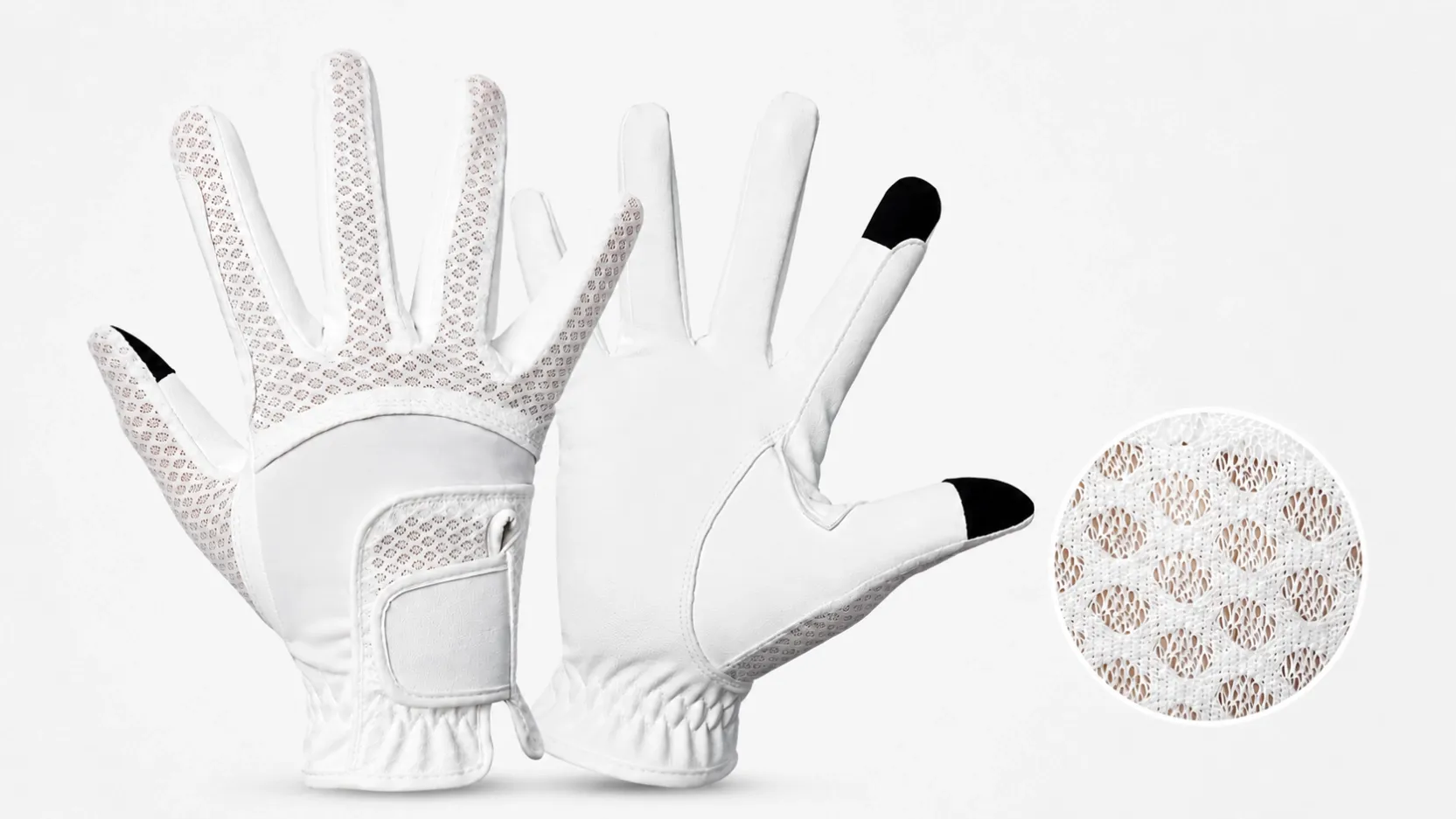
Contact us to discuss your custom polo glove project or submit your reference images and initial specifications.